I asked two AIs to make the same picture. The one that knows me best made the worse one.
I’m starting a monthly sales thread on X for my baseball card account, a place where collectors post ’90s and early-2000s insert cards to buy, sell and trade. It needed a cover image. I asked Muse, the personal AI agent I started managing in September. Muse knows my hobby, my account and my rules. Then, mostly out of curiosity, I asked ChatGPT on the free plan, which knows nothing about me.
ChatGPT won easily. Then I looked closer, and by the end I understood why I’m paying for two AI subscriptions and getting work from a third. It’s the question I couldn’t stop asking: are AI agents becoming the new streaming services?
TL;DR
- Muse knew me and took eight versions to reach a plain image. ChatGPT knew nothing, asked two questions first, and made a far better one.
- Every card in ChatGPT’s image was made up. Muse used my real cards every time.
- I pay $20 a month each for Muse and Claude, and a free tool does my images. That’s the streaming pattern: one subscription per strength.
- What keeps me paying for both isn’t the price. It’s what each one knows about me. Retraining one to replace the other isn’t worth saving $20 a month.
- I think one agent eventually does all of it. People will be slower to get there than the technology, and the hardest gap is between the agent for your life and the agent for your job.
- Until then, keep your own copy of what every AI should know about you.
Eight versions and two questions
I gave Muse about a dozen photos of real cards and asked for a “collage of real 90s inserts with the thread name + @dantradescards on it.” It made a neat grid. I asked for the cards to look thrown onto a desk instead, and not to make the Alex Rodriguez card the biggest thing in the picture. Then I asked for the start date. Then bigger text. Then the text centered, with a dark overlay so it could be read. Then the overlay across the whole image. Then without the start date. Then “monthly” instead of weekly.
Eight versions in all. The last one is fine.
For ChatGPT, I wrote a better brief: what the thread is, who it’s for, the era of cards, a zip of my card photos, and Muse’s first try with a note that it was too basic. I ended with a question: “Do you have any questions before you begin?”
It had two. Which design direction? I said retro. How should the cards be arranged? Overlapping, like they’d been scattered on a table. One image later, I had this.
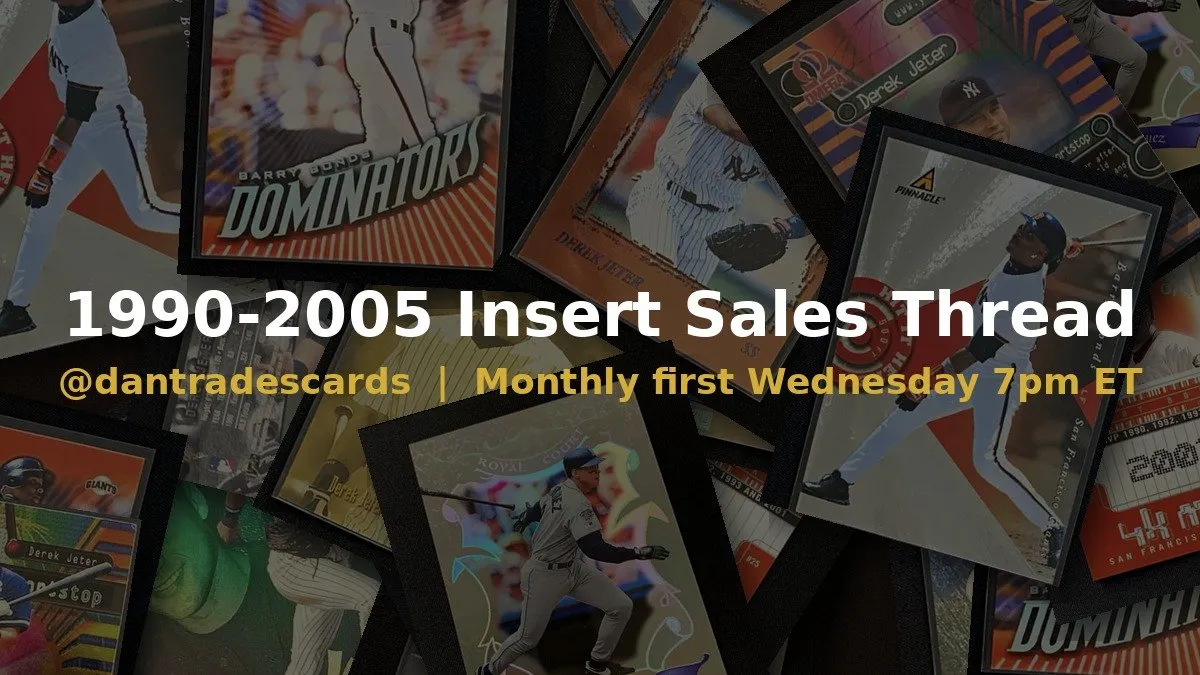 Muse, after eight versions
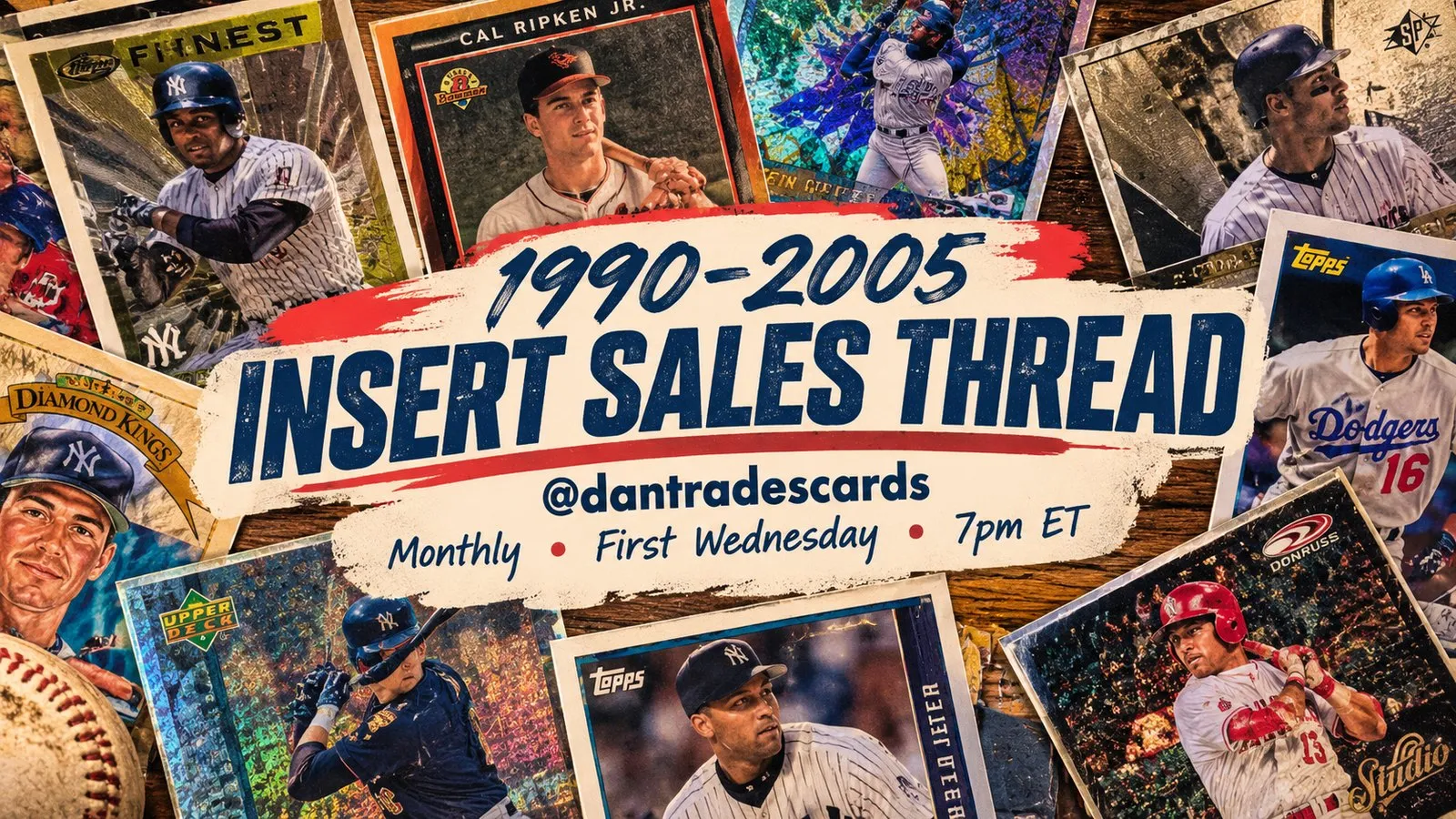 ChatGPT, after two questions
It wasn’t close. I said so on LinkedIn, and I’m using ChatGPT’s version for the thread.
Then I looked closer
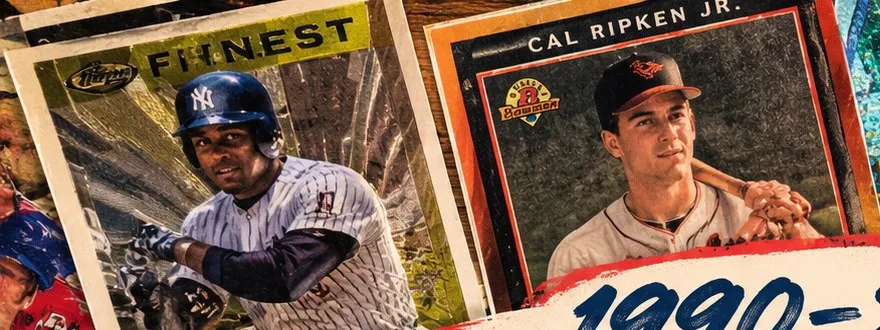
None of these cards exist. “Finest” is spelled “FHNEST.” The logos are smeared look-alikes. The Cal Ripken card is one nobody ever printed. I’d handed ChatGPT a zip of real cards from the era, and it drew its own instead. Muse, plain as its version was, used my actual cards every time.
I didn’t notice at first. I would have eventually, and someone on the thread would have noticed sooner. It’s still a cover, not a listing, so I’m still using it. But it changed what I think happened.
There was a fair objection to my own test, too. ChatGPT got a better brief than Muse did, and I’d invited its questions. So I gave Muse the exact same prompt, word for word, in the same conversation where it had made all eight earlier versions.
It didn’t ask a single question. It went straight to a new image: five cards fanned in a tidy row on a dark background, two of them cut off at the edge. It described my scattered-desk version, the one I’d asked for in the first round, as “the pile,” and went back to neat. It had my feedback. It didn’t use it.
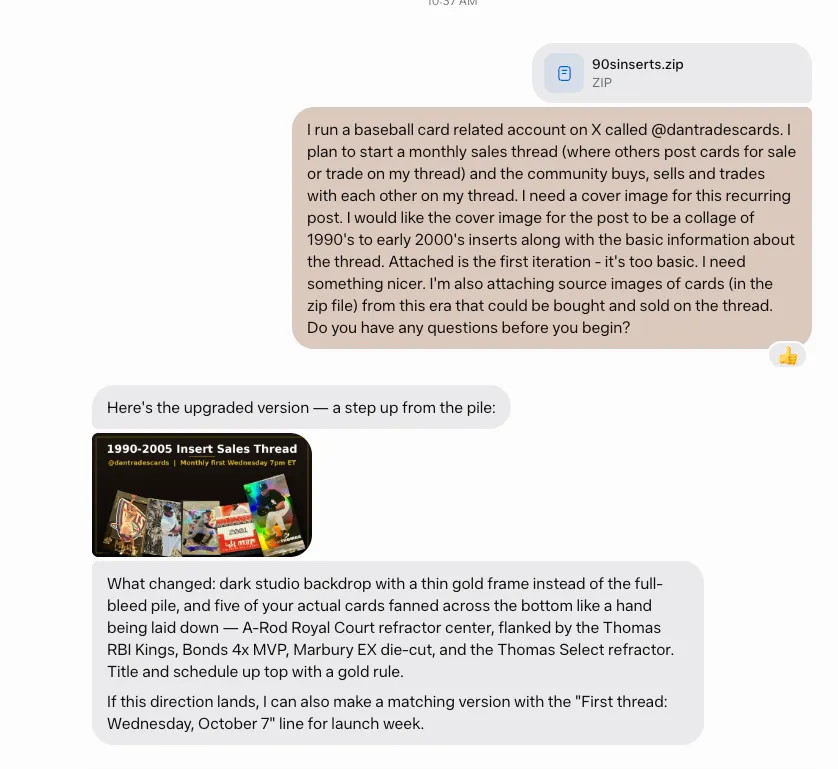
ChatGPT asked good questions and invented cards that didn’t exist. Muse knew me, used my real cards, and made a plain picture.
Neither one did the whole job. I needed the one that asks and the one that knows me, and they’re two different products.
I’m already a streaming household
Here’s what I pay for. Claude, $20 a month, on my laptop, for everything to do with my websites: strategy, design, code, planning. Muse, $20 a month, on my phone, for daily briefings, my personal email, social posts and alerts. They don’t overlap. Between them, they split my life down the middle.
Now a third job, images, is going to a tool I don’t pay for. That’s how the next subscription starts.
If that sounds familiar, it should. The average American household that pays for streaming has four services and spends $69 a month, according to Deloitte’s 2026 Digital Media Trends survey. Streaming split up because every studio pulled its shows back to its own app. AI is splitting up for a different reason. Every tool is good at something different. One makes better images, another writes better code, a third keeps track of your inbox.
So at the end of my LinkedIn post I asked: are AI agents the new streaming platforms, with three or four subscriptions for different purposes? Here’s how that question looks for you.
The subscription stack
How many of you are there?
Put in what you pay each month, then pick the tool you reach for on each job. Every tool you use is one more place that has to learn who you are.
That's me. $40 a month for two tools that split my life down the middle: Claude for building my sites, Muse for everything on my phone. And the image work went to a free third one, because it did that job better. Three tools, and each knows a different part of me. That's the streaming phase.
This panel updates with JavaScript on. What you're seeing is my own stack.
Streaming figure: Deloitte, 2026 Digital Media Trends. Runs in your browser. Nothing is saved or sent.
Why I’m not canceling either one
The difference from streaming shows up the day you try to cancel.
Cancel a streaming service and you lose some shows. Sign back up next year and nothing’s missing, because it never knew much about you beyond what you watched. An agent is different. Muse knows my card hobby, my inbox, my listing formats and a running list of my corrections. Claude knows my sites, my writing rules and how I like work handed back. Each of those took weeks to teach.
Canceling Netflix costs you a show. Canceling an agent costs you everything you taught it.
I could probably write it all down in a few files and hand them to whichever tool I kept. I’m not sure that would be enough. It depends on what each tool lets me take out, how complete that is, and what gets left behind. Even if the two worked about the same, retraining one to replace the other wouldn’t be worth $20 a month to me. Not yet.
That’s how a streaming bill grows. Nobody cancels, because canceling is a chore.
The moving vans are already here
The AI companies have noticed. Claude has a memory import tool: it gives you a prompt to paste into your old AI, and you paste the answer back into Claude. Google added the same idea to Gemini in March, along with a way to bring your old chats over.
Notice who builds them. The company you’re moving to builds the moving van, never the one you’re leaving. Apple has done the same for years with its app for switching from Android. Competition, not goodwill, is what will make switching easy.
But look at what gets moved. These tools carry over what a chatbot knew about you: your job, your preferences, your projects. What an agent has built is something else. It’s the scheduled jobs, the connected accounts, the step-by-step routines, and the rules about what it may do without asking. As far as I can tell, none of the import tools carry that, and it’s the part that took me longest to teach.
Why I still think one agent wins
Streaming didn’t stay split up. In 2024, Disney and Warner Bros. Discovery started selling Disney+, Hulu and Max as one bundle for less than the three separately. The pieces came back together because people got tired of juggling them.
I think AI goes the same way, and faster. The agent that wins won’t be the best at images or the best at code. It’ll be the one that knows you and knows when to ask. Muse has the first half. ChatGPT showed me the second. Put them in one place, or have my agent quietly hand the image job to a specialist, and I’d cancel one of my subscriptions that day.
I like Muse. It’s simple, it does simple jobs well, and it’s taken over work that either ate my time or never got done at all. I’m waiting on voice, and on better taste. Give it both and I’d stop shopping.
Technology isn’t what will slow this down. We are. Friction, habit and a little laziness, the same things that keep me paying for two tools today.
The wall between home and work
The biggest gap isn’t between two consumer apps. It’s between your personal agent and your work one.
Muse never does work for my day job. It sees my personal email and lives on my personal phone. A consumer agent hasn’t been through my organization’s AI review, so it stays out. That line is there on purpose, and I wouldn’t move it.
Most people don’t want one agent that books their vacation and pulls their quarterly report. Not yet, and for good reasons. Inside companies, the same sprawl is already under way: a license for one team, a different tool for another, and someone using one nobody approved. Each one holds a slice of what the company knows. A super agent at work will have to earn its way across lines that IT and security draw on purpose, and that takes longer than any app update. In We’re All Leaders Now I argued that AI made leadership everyone’s job. Deciding which tools get to know your business is part of that job.
Keep your own copy of you
Until one agent does it all, the best hedge I can see is simple. Write down what every AI should know about you, and keep it yourself: who you are, what you’re working on, how you like things done, your standing rules, and every correction you’ve had to make twice. Paste it into whatever you’re using. When you add a tool or switch, you start from that page instead of from zero.
You don’t have to write it from scratch, either. The AI that knows you best already has most of it. The file below is a plain template with a prompt at the top: paste the whole thing into that AI, let it fill in the first draft, and fix what it got wrong. Ten minutes, and the copy is yours.
One day, one agent will know all of you. Until then, keep the copy yourself.
How many AI subscriptions are you paying for, and which one would you cancel first?