
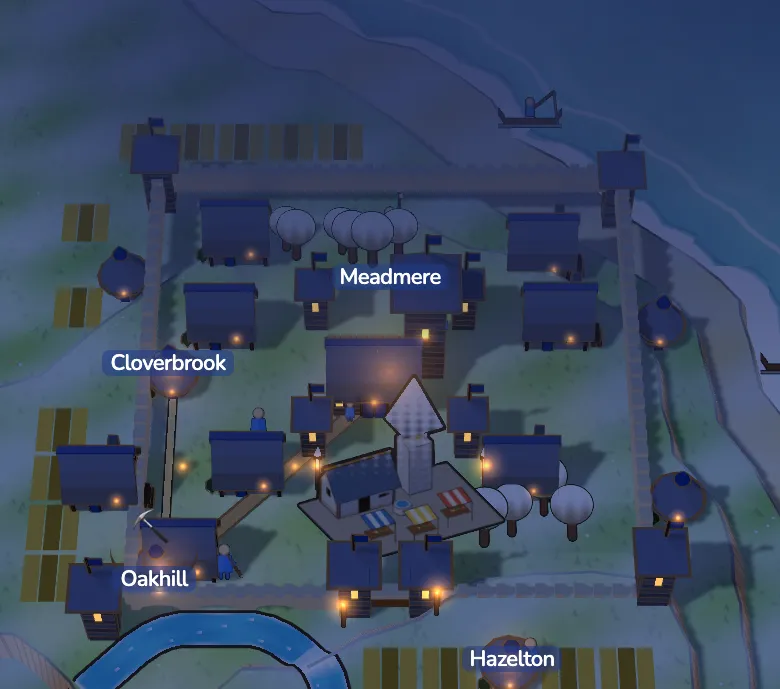
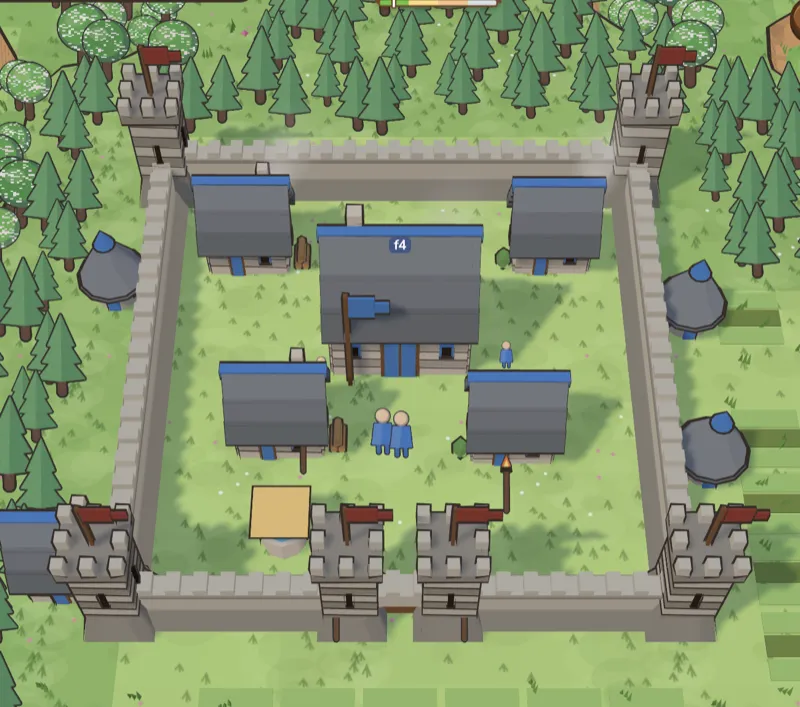
Three weeks ago I started building a video game. I’m not a developer, and I’ve never made a game. As I write this it’s on version 0.48, and anyone can play it in a browser.
That’s the story I expected to tell. The one I didn’t expect is that the game was never what went wrong. My time was.
Why a game
I’ve been a gamer since I was a kid, starting on a friend’s Apple IIGS. Populous was an early favorite. I’ve forgotten most of the details. What stuck was the feeling: playing for hours as a benevolent, lowercase-g god, helping my followers. Years later my sons grew up playing Minecraft with me, and that stuck too.
I’d been thinking about making a game like that for about a year. Thinking was all I could do. I lead marketing technology at a health system. I don’t write code.
What changed was Claude Code, an AI tool that writes the software while you describe what you want. I’d used it to move my two personal sites off WordPress after years of meaning to, and my confidence grew with each one. So I took on a game. It started with a planning session: the basics, the pillars, a little of the vision. One rule came out of that session and hasn’t changed since. Fun first.
I wanted to be a doer
I did it for one reason. People learn tools by using them.
At work, every AI decision I make carries weight it should carry: patient data, security, budget, the people on my team. I’ve written about going first with AI so your team doesn’t have to guess. But going first at work means going carefully. The game is my playground. Nothing in it can hurt anybody, so I can try things I’d never try on the job and find out what the tools really do.
It doesn’t make me an expert. But after a while you can tell who’s a talker and who’s a doer, and I wanted to be a doer.
What the AI can’t do
The routine is simple. I plan in the evening. Claude builds overnight, usually about three versions. The next morning I check that the game updated, and when I get time I play it on my iPhone with the Notes app open. Bugs, ideas, screenshots. Then I paste all of it back in.
It listens closely. One line in my notes for version 0.43 read “next big idea: island configuration.” The next build had a Custom island screen.
What it can’t do is tell me whether any of it is fun. It can build an island in a night. It has no idea if I’ll want to play that island twice. Only a person can decide that, and deciding takes hours of actually playing. The building got cheap. The judging didn’t.
That’s why the alpha is open. The game needs more players than me, so if you have ten minutes, go play it and tell me what’s boring.
What broke was my time
Most days I kept the work moving from my phone. That was the breakthrough, and it was the problem. The work was always in my pocket, and it was fun. I’d get into a flow state and look up two hours later.
It also wasn’t one project. Goshen is one of four. Two are on Off the clock. A third isn’t ready for daylight, and a fourth doesn’t have a name yet.
It added up like this. About 50 hours a week at my day job, much of it in the office. Then I’d come home and work another four, five, six hours or more. Then most of the weekend.
I’d noticed it before it clicked. It clicked on a Saturday morning. My youngest son had a packed weekend ahead of him, and I should have been helping him get ready. I should have been a dad that morning. I was working on the game.
Here’s my week, one square at a time. Mark up yours.
The week and the box
Whose time is your side project using?
A week in 21 squares: seven days, each split into morning, afternoon and evening. Call each square about four hours.
- Clear the week
- Their time
- Your side project
Step 1 of 3
This is my week.
Filled squares are where my side projects showed up. Outlined ones belonged to my family. Clear it to mark up your own.
Step 2 of 3
Mark their time.
Tap every square that belongs to someone else: a family dinner, a kid’s game. Leave the side project out of it for now.
Step 3 of 3
Mark your side project.
Tap every square it took last week. Count the ones where you were only checking your phone.
- Side project
- Someone else’s
- Both
4 of my 9 squares weren’t mine to spend.
Three family dinners, and the morning my son needed me. Give them back and the project keeps 5 squares, about 20 hours a week. That’s the box.
What else goes in the box →This panel works with JavaScript on. What you’re seeing is my week.
Runs in your browser. Nothing is saved or sent.
The limit used to be built in
I’ve never been a hustle-culture person. For most of my life I didn’t have to resist it, because I couldn’t build the things I thought about. An idea for a game stayed an idea. The limit came free with not knowing how.
I’ve never wanted to be a hustle-culture guy. But I’ve never had the tools to build what I wanted, either.
Now the limit is gone, and I’m starting to wonder if AI is going to double down on hustle culture for a lot of people. Early research points that way at work. Researchers at UC Berkeley spent eight months inside a 200-person company and found that AI tools didn’t lighten the load. People worked faster, took on more, and let the work spread into more hours of the day, often without anyone asking them to.
Nobody asked me to, either. This summer I wrote about where the hours AI gives back actually go on a team. At home I found out the same way everyone does. They go into more work, unless somebody decides otherwise.
If you lead people, pay attention to this one. The people on your team who get the most excited about these tools are the ones it’s most likely to happen to.
Draw the box first
I don’t have this solved. What I have is the shape of the answer.
I need to draw a box around the effort, the same way I’d set boundaries for a day job. After-hours work needs its own. I want to keep making progress on these projects. They can’t come at the expense of my family.
The other thing I skipped was deciding up front what I was trying to get out of it. For me it started as learning. Then learning turned into the idea that the game might make money someday, which I still want. Just not at the price of everything else.
A side project with no stated purpose will take whatever you give it.
If someone on my team read this and started their own project, I’d be proud, and I’d tell them to go for it. I hope my sons see this one day and get the same idea. I’d also hand them the step I skipped: write down what it’s for, when you work on it, and what it never comes ahead of. Do it before the first late night, while it’s still easy.
The tools will keep going as long as you do. Somebody has to decide when the day ends, and it’s going to have to be you.
If you’re building something on the side with AI, I’d like to hear where you drew your line, or whether you’ve drawn one yet. Head over to LinkedIn and let’s talk about it.